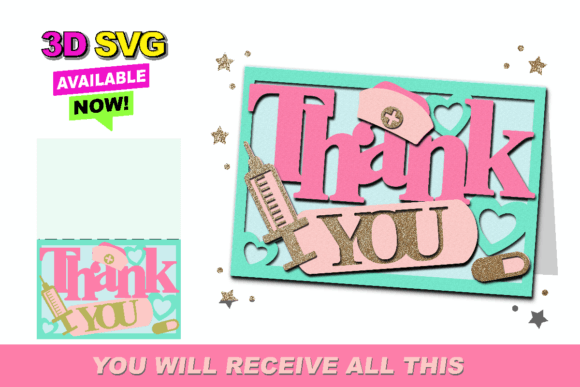
Crafting Gratitude: The Ultimate Guide to 3D SVG Nurse Thank You Cards
In a world increasingly dominated by digital communication, the tangible impact of a handwritten note remains unparalleled. This is especially true when expressing gratitude to healthcare professionals. Nurses, who dedicate their lives to caring for others, often receive an abundance of generic gifts. However, a handcrafted 3D pop-up card stands out as a unique, personal, and deeply meaningful gesture. For crafters, hobbyists, and small business owners, utilizing a Nurse Thank You Card 3D SVG file offers the perfect blend of technological precision and artistic soul. This guide will walk you through everything you need to know about these digital designs, how to use them with popular cutting machines like Cricut and Silhouette, and why they have become a staple in modern creative expression.
Understanding the Power of the 3D SVG Format
Before diving into the cutting process, it is essential to understand what an SVG file actually is and why it is the gold standard for digital crafting. SVG stands for Scalable Vector Graphics. Unlike pixel-based images (like JPEGs or PNGs) that can become blurry when enlarged, vector files are made of mathematical paths. This means you can resize your nurse thank you card design from a tiny gift tag to a large wall decoration without losing any crispness or detail.
When we add the "3D" element to the equation, we are referring to the engineering behind the cut file. A 3D SVG is not just a flat image; it is a complex arrangement of layers, tabs, slots, and fold lines designed to create depth when assembled. In the context of a nurse appreciation card, this might involve a stethoscope that pops off the page, a layered heart, or a medical cross that rises from the background. These files are meticulously calculated to ensure that when paper is folded and glued, the structural integrity holds, creating a stunning visual surprise for the recipient.
Why Choose a Digital Download in a Zipped Folder?
You may notice that when you purchase or download these designs, they often arrive in a .zip folder. This is a standard practice in the digital crafting community for several practical reasons. First, a single project often requires multiple file formats to ensure compatibility with every type of machine on the market. Inside that zipped folder, you will typically find:
- SVG files: The primary format for Cricut Design Space and Silhouette Studio.
- DXF files: Often used for older versions of Silhouette software or other plotters.
- PNG files: Useful for sublimation printing or digital mockups.
- PDF instructions: Step-by-step assembly guides with photos.
Zipping these files together keeps the download organized and reduces the file size for faster transfer. Once downloaded, simply right-click the folder and select "Extract All" (on Windows) or double-click it (on Mac) to access your ready-to-cut files. This convenience allows creators to start their projects immediately, bridging the gap between digital acquisition and physical creation.
Compatibility with Cutting Machines: Cricut and Silhouette
The beauty of modern crafting technology lies in its accessibility. Whether you are a long-time user of Silhouette Studio or prefer the user-friendly interface of Cricut Design Space, these 3D SVG files are engineered to work seamlessly with both platforms. However, understanding the nuances of each software can help you achieve the best results.
For Cricut users, the process is straightforward. After extracting your files, you upload the SVG directly into Design Space. The software automatically recognizes the different layers, assigning them distinct colors which helps you visualize the assembly order. Cricut machines excel at handling intricate cuts, making them ideal for the delicate tabs required in 3D paper engineering. The "Make It" feature will arrange your pieces on the virtual mat, ensuring you use your cardstock efficiently.
Silhouette users, particularly those with the Cameo or Portrait models, will also find these files easy to manipulate. In Silhouette Studio, importing an SVG allows you to adjust line thickness and cut settings with granular control. Many experienced crafters appreciate Silhouette for its ability to handle custom line types, such as setting specific lines to "cut," "draw," or "score." For a 3D card, setting the fold lines to "score" rather than "cut" is crucial for a clean bend that doesn't tear the paper.
- Check your software version: Ensure your Silhouette Studio is updated to the latest version to avoid import errors with complex SVGs.
- Ungroup elements: Once imported, ungroup the design to move individual layers if necessary for material placement.
- Verify cut settings: Always perform a test cut on a scrap piece of your chosen cardstock to dial in the pressure and blade depth.
What If You Use a Different Machine?
The prompt notes that if you are using another type of machine, you must ensure compatibility. While Cricut and Silhouette dominate the market, many crafters use machines like Brother ScanNCut, Sizzix Eclipse, or even laser cutters. The good news is that the DXF format included in most zipped folders is universally accepted by almost all vector-based cutting software. If your machine does not support SVG or DXF, you may need to convert the file using third-party software, though this is rarely necessary for modern devices. Always consult your machine's manual regarding supported file types before purchasing a design.
The Significance of Handmade Appreciation in Healthcare
Why go through the trouble of cutting, folding, and gluing when a store-bought card is available? The answer lies in the intent and effort conveyed by a handmade item. Nurses often face high-stress environments, long shifts, and emotional burnout. Receiving a mass-produced card can feel transactional. In contrast, a 3D pop-up card demonstrates that the giver invested time, thought, and creativity specifically for them.
This form of crafting fits beautifully into the broader movement of slow living and mindful creation. It transforms a simple act of saying "thank you" into a therapeutic activity for the crafter and a cherished keepsake for the nurse. In educational settings, nursing schools often encourage students to exchange these cards during graduation, fostering a sense of community. In hospitals, patient families use them to express profound gratitude that words alone cannot capture.
Practical Tips for Assembling Your 3D Card
Creating the card is only half the journey; assembly is where the magic happens. To ensure your Nurse Thank You Card looks professional and functions correctly, consider these expert tips:
- Choose the right weight: Use cardstock between 65lb and 80lb (176–216 gsm). Anything lighter may not hold the 3D structure, while anything heavier may be difficult to fold cleanly.
- Score before folding: Even if your machine has a scoring wheel, running a bone folder along the fold lines before assembling ensures crisp edges.
- Use quick-dry adhesive: Liquid glue can warp paper. Glue dots or a fine-tip glue pen are ideal for attaching the small tabs in 3D designs.
- Follow the layer order: Most 3D SVGs come with numbered layers. Assemble from the background forward to avoid trapping pieces underneath.
Expanding Your Creative Horizons
Once you master the basic Nurse Thank You Card 3D SVG, the possibilities are endless. These skills are transferable to other niches within the healthcare community, such as creating similar designs for doctors, surgeons, or EMTs. Furthermore, this hobby can evolve into a small business. Many crafters sell completed cards at local fairs or offer custom digital files on platforms like Etsy. The demand for personalized, high-quality appreciation gifts in the medical field is consistently high, making this a viable avenue for entrepreneurial creativity.
It is also worth noting that these projects are excellent for group activities. Schools, church groups, or corporate teams can organize "card-making parties" to produce hundreds of cards for local hospitals. This not only spreads joy but also builds community connections, highlighting the social value of digital crafting tools.
Conclusion: Bridging Technology and Heartfelt Emotion
The Nurse Thank You Card 3D SVG represents a perfect intersection of modern technology and human emotion. It leverages the precision of digital design and the efficiency of automated cutting machines to create something deeply personal and tactile. By downloading a zipped folder containing these versatile files, you gain access to a world of creative potential that is accessible to beginners yet satisfying for experts.
Whether you are using Cricut Design Space, Silhouette Studio, or another compatible cutter, the result is the same: a beautiful, dimensional tribute to the heroes in our healthcare system. In an era where convenience often trumps quality, taking the time to craft a 3D card sends a powerful message. It says, "You are worth the extra effort." So, fire up your machine, extract those files, and start creating a token of gratitude that will truly make a nurse's day brighter.