Crafting Whimsy: A Guide to 3D Butterflies Double Layered Wall Decor for Digital Fabrication
The intersection of digital design and physical craftsmanship has opened new avenues for creators to transform interior spaces. Among the most captivating trends in nursery and children's room aesthetics is the use of dimensional wall art that adds depth and texture to flat surfaces. Specifically, 3D Butterflies Double Layered Wall Decor represents a perfect marriage of laser cutting precision and artistic expression. This approach allows hobbyists, professional makers, and small business owners to produce enchanting decor that turns a standard room into a whimsical wonderland without the need for complex molding or heavy construction.
At the heart of this creative process are digital vector files designed specifically for computer-controlled machinery. These files enable the production of layered elements that, when assembled, create a striking three-dimensional effect. The concept relies on stacking two distinct layers of material—often wood and acrylic or dual layers of wood—to generate shadow and depth. When executed correctly, the result is a floating appearance that captures light dynamically, changing the feel of the space throughout the day.
The Mechanics of Layered Design
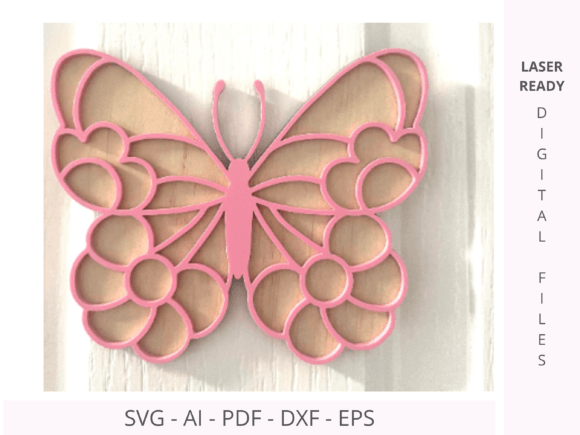
Understanding the mechanics behind 3D Butterflies Double Layered Wall Decor is essential for anyone looking to utilize these designs effectively. Unlike traditional flat cutouts, layered designs require precise alignment and an understanding of material thickness. The typical design consists of a base layer and a top layer, separated by a small gap or adhered directly to create a relief effect. In the context of the specific designs discussed here, the butterflies measure approximately 15cm wide by 13cm high (roughly 5.90 x 5.11 inches). This size is significant; it is large enough to make a visual statement on a wall but small enough to be arranged in clusters or swarms without overwhelming the space.
The "double layered" aspect is crucial for achieving the 3D illusion. When a laser cutter or CNC machine processes the file, it cuts two separate profiles for each butterfly. One profile might be slightly larger or feature different internal details than the other. By offsetting these layers during assembly, the creator introduces Z-axis depth to a traditionally two-dimensional medium. This technique mimics the natural curvature of a butterfly's wings, adding a lifelike quality that flat decals simply cannot achieve.
Material Selection and Compatibility
The versatility of these digital files lies in their compatibility with various materials, though the choice of substrate dramatically alters the final aesthetic. The original designs were created and tested on a 60w laser machine, a standard power level for many small to mid-sized workshops. This power rating is ideal for cutting through materials like 3mm to 6mm plywood, MDF, and cast acrylic.
- Wood: Using natural woods like birch plywood offers a warm, organic feel that complements nursery themes. The laser engraving can add grain texture or vein details to the wings, enhancing the realism.
- Acrylic: Incorporating acrylic layers introduces translucency. When light hits the edge of an acrylic wing, it glows, creating a magical effect especially potent in rooms with soft lighting or near windows.
- Mixed Media: Combining a wooden base with an acrylic top layer (or vice versa) creates a sophisticated contrast between matte and gloss finishes, adding visual interest to the 3D Butterflies Double Layered Wall Decor.
It is vital for creators to ensure their machinery and software are compatible with the chosen material thickness. Since the files are designed with specific kerf (the width of the cut made by the laser) and tolerance in mind based on a 60w machine setup, adjustments may be necessary if using a significantly more or less powerful device. Users familiar with CorelDraw will find the native environment intuitive, but the availability of multiple file formats ensures broader accessibility.
Digital File Ecosystem and Workflow
The backbone of any successful digital fabrication project is the file format. For these butterfly designs, the provider offers a comprehensive suite of five distinct file formats: SVG, DXF, AI, EPS, and PDF. This variety is not merely redundant; it serves the diverse needs of the maker community, ranging from hobbyists using desktop cutters to industrial operators running large-scale CNC routers.
SVG (Scalable Vector Graphics) is perhaps the most versatile for web-based design tools and modern laser software like LightBurn. It preserves vector paths perfectly, ensuring smooth curves regardless of scaling. DXF (Drawing Exchange Format) remains the industry standard for CAD programs and is universally accepted by almost every CNC control software, making it a safe bet for engineering-focused workflows. For graphic designers who prefer Adobe Illustrator, the AI format provides editable layers and native compatibility. Similarly, EPS serves as a robust bridge between different vector editing platforms, while PDF offers a universal viewing option that still retains vector data for printing or importing into various design suites.
Before purchasing or downloading such assets, it is imperative that the user possesses the technical knowledge to handle these files. This includes knowing how to import them into their preferred software, scale them appropriately without distorting the aspect ratio, and assign the correct cut settings for their specific machine. Since these are digital-only products, there is no physical shipping involved; the value lies entirely in the data and the user's ability to manifest it physically. A lack of familiarity with opening or manipulating these file types can lead to frustration, so due diligence regarding software compatibility is a prerequisite for success.
Applications Beyond the Nursery
While the primary marketing angle for 3D Butterflies Double Layered Wall Decor often targets parents looking to decorate a child's room, the utility of these designs extends far beyond nurseries. Educators and researchers in STEM fields can use the assembly process as a teaching tool for geometry, spatial reasoning, and manufacturing principles. Students can learn about vector mathematics, the physics of light and shadow, and the practical application of computer-aided design (CAD).
For business owners and event planners, these designs offer a cost-effective solution for creating custom backdrops. A swarm of laser-cut butterflies can serve as an elegant photo booth background for weddings, baby showers, or spring-themed corporate events. Because the files are digital, a business can produce hundreds of units on demand, minimizing inventory costs and allowing for customization based on client color schemes. The ability to swap materials—from rustic wood for a barn wedding to glitter acrylic for a gala—demonstrates the adaptability of the design.
Furthermore, interior designers working on boutique hotels or cafes often seek unique wall treatments that break the monotony of paint and wallpaper. Installing a collection of 3D butterflies can create a focal point that draws the eye and encourages social media engagement from patrons. The tactile nature of the wood and the precision of the laser cuts convey a sense of quality and attention to detail that resonates with consumers.
Implementation Strategies and Best Practices
Successfully bringing 3D Butterflies Double Layered Wall Decor to life requires a structured workflow. The process begins with file preparation. Once the ZIP file containing the SVG, DXF, AI, EPS, and PDF formats is downloaded, the user should open the file in their native software to inspect the vectors. It is common practice to check for open paths or overlapping lines that could cause the laser to double-cut or burn the material unnecessarily.
Next comes material preparation. Whether using a 60w laser or a different configuration, test cuts on scrap material are non-negotiable. These tests verify that the power and speed settings are optimized for the specific batch of wood or acrylic being used. Since the design relies on two layers fitting together or aligning perfectly, even a slight deviation in cut width can affect the final assembly. If the layers are meant to be glued, the fit should be snug; if they are meant to float with spacers, the dimensions must account for the spacer thickness.
Assembly is the final and most rewarding stage. For a true 3D effect, creators often use small dots of strong adhesive or double-sided foam tape between the layers. When mounting the finished butterflies to the wall, varying the orientation and height can simulate flight. Arranging them in a sweeping curve or a scattered cluster adds dynamic movement to the room. It is also worth considering the wall color; lighter walls tend to highlight the shadows cast by the 3D layers, enhancing the depth perception, while darker walls can make the silhouette of the butterflies pop dramatically.
Considerations for the Modern Maker
In the era of digital marketplaces, distinguishing between physical goods and digital assets is a critical consumer skill. When acquiring designs for 3D Butterflies Double Layered Wall Decor, buyers must remember that they are purchasing intellectual property and instructions, not the finished object. This distinction empowers the buyer to control the quality of the final product through their choice of materials and finishing techniques. However, it also places the burden of execution on the buyer.
Creators must also be mindful of licensing terms. While many files are sold for personal use, those intending to sell the physical成品 (finished goods) produced from these files should verify the commercial license status. Ethical creation involves respecting the designer's work while leveraging their tools to build one's own business or home environment.
Ultimately, the appeal of these laser-cut designs lies in their ability to bridge the gap between digital precision and handcrafted charm. They offer a tangible way to apply technology to art, resulting in decor that is both modern and timeless. Whether for a professional signage shop, a classroom project, or a weekend DIY endeavor, the 3D Butterflies Double Layered Wall Decor files provide a robust foundation for creativity. By understanding the file formats, selecting the right materials, and applying thoughtful assembly techniques, makers can transform simple sheets of wood and acrylic into a soaring display of artistry that delights viewers of all ages.