Evaluating Happy Mother's Day 3D Backgrounds for Professional and Personal Design Projects
When planning visual content for Mother's Day, designers and hobbyists often face a critical decision regarding the format and style of their assets. Among the various options available, a Happy Mother's Day 3D Background has emerged as a distinct category that bridges the gap between flat graphic design and immersive digital art. Unlike traditional two-dimensional illustrations, these backgrounds utilize depth, lighting, and texture to create a sense of volume that can significantly enhance the perceived quality of a project. Understanding what constitutes a high-quality 3D background, how it compares to other formats, and where it fits best in your workflow is essential for making an informed choice.
Defining the 3D Aesthetic in Holiday Graphics
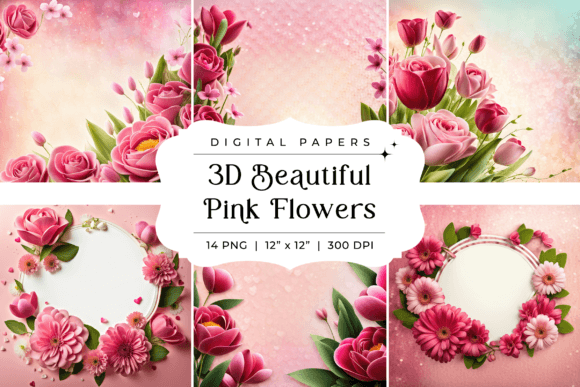
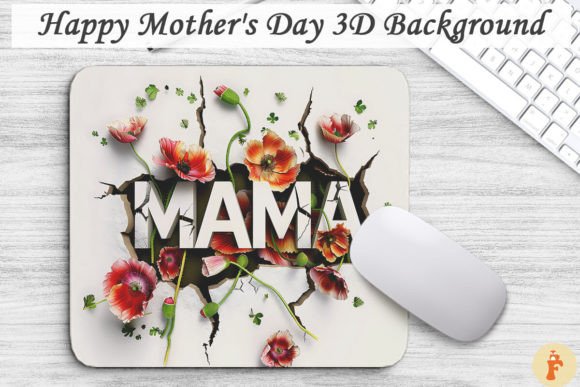
A Happy Mother's Day 3D Background is characterized by its use of dimensional rendering techniques. These designs typically feature elements such as floating balloons, textured flowers, ribbons with realistic folds, and typography that appears to pop off the screen. The primary distinction lies in the simulation of light and shadow, which gives the image a tangible feel. When you examine a set of Mother's Day 3D Designs, you are looking at files that have been rendered to mimic physical objects, often resulting in a more premium and modern look compared to vector-based flat art.
The technical specifications of these files play a crucial role in their utility. High-resolution assets, such as those offering 300 DPI, are standard for professional-grade 3D Mother's Day Graphics. This resolution ensures that when the image is printed on physical media like invitations or banners, the edges remain crisp, and the gradient shading does not pixelate. For instance, a design measuring approximately 15.5 x 13.6 inches provides a substantial canvas that can be scaled down for social media posts or maintained at full size for large-format printing without losing fidelity.
Comparative Analysis: 3D Raster vs. Vector and Flat Design
To determine if a Happy Mother's Day 3D Background is the right resource for your specific needs, it is helpful to compare it against alternative formats commonly used in the industry. The most frequent comparison is between 3D raster images (typically PNG or JPG) and vector graphics (SVG or EPS).
- Visual Depth and Realism: 3D backgrounds excel in creating atmospheric and realistic scenes. If your goal is to evoke emotion through lifelike textures—such as the softness of a petal or the sheen of a balloon—3D illustrations are superior. Flat vector designs, while clean and scalable, often lack this tactile quality unless complex gradients and mesh tools are used, which can be time-consuming.
- Scalability and Editing: This is the primary trade-off. Vector files (SVG) are infinitely scalable and can be easily edited in software like Adobe Illustrator or cut using machines like Cricut. In contrast, a 3D Mother's Day Wallpaper or background provided as a PNG is a flattened image. While a 300 DPI file can be resized significantly, it is not infinitely scalable like a vector. Furthermore, because these files are not layered for cutting, they are not suitable for projects requiring die-cutting or vinyl plotting.
- Workflow Efficiency: Using pre-rendered 3D assets saves considerable time. Creating a custom 3D scene from scratch requires specialized software (like Blender or Cinema 4D) and rendering time. Downloading a ready-made Mother's Day 3D Illustration allows you to focus on layout and typography rather than modeling and lighting.
Ideal Use Cases and Application Scenarios
The versatility of a Happy Mother's Day 3D Background makes it suitable for a wide array of applications, provided the limitations of the file format are understood. These assets are particularly effective in scenarios where visual impact is prioritized over editability of individual elements.
Digital Marketing and Social Media
For social media managers and digital marketers, these backgrounds serve as excellent foundations for posts, stories, and cover photos. The depth of the 3D design helps content stand out in crowded feeds. Since platforms like Instagram and Facebook compress images, starting with a high-resolution source file ensures the final output retains clarity. You can overlay text, logos, or call-to-action buttons directly onto the 3D scene without worrying about conflicting layers, as the background acts as a cohesive unit.
Print Media and Physical Products
In the realm of print, the 300 DPI resolution of professional 3D graphics supports high-quality production. These files are ideal for:
- Greeting Cards and Invitations: The realistic textures add a touch of elegance that flat colors sometimes miss.
- Banners and Signage: Large format printing benefits from the detailed shading found in 3D renders.
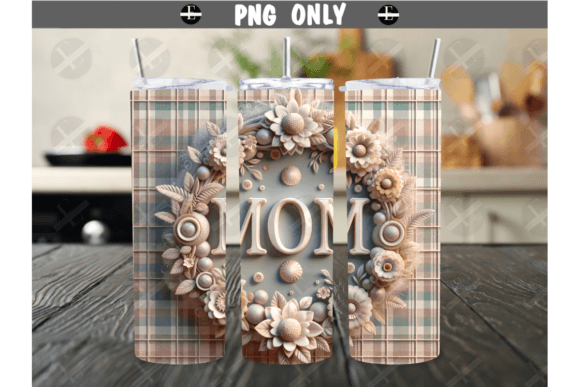
- Merge Products: As noted in many product descriptions, these designs are not limited to paper. They are frequently used for sublimation projects, such as mouse pads, mugs, and tote bags. The vibrant colors and depth translate well onto fabric and coated surfaces.
- Scrapbooking: Digital scrapbookers can import these PNG files directly into their layouts to create dimensional pages without needing to manually shadow each element.
Technical Considerations and Limitations
While the aesthetic benefits are clear, users must be aware of the technical constraints associated with 3D Mother's Day Graphics. The most significant limitation is the file format. Most premium 3D backgrounds are distributed as PNG files within a ZIP archive. This means the user must have the capability to unzip files on their PC or Mac to access the content. Unlike SVG files, these PNGs are not composed of separate paths; they are a single grid of pixels.
Consequently, if your project requires you to change the color of a specific flower or move a ribbon independently of the rest of the scene, a flattened 3D background may not be the optimal choice unless you possess advanced photo editing skills to mask and reconstruct elements. Additionally, color variation is a factor to consider. The appearance of 3D renders relies heavily on lighting values, which can shift depending on the monitor calibration of the viewer or the color profile of the printer. It is always advisable to request a proof or test print when using these assets for critical commercial projects.
Making the Right Choice for Your Project
Deciding whether to utilize a Happy Mother's Day 3D Background ultimately depends on the specific requirements of your design brief. If your priority is speed, visual richness, and a modern aesthetic for digital screens or standard printing, these assets offer an exceptional return on investment. They eliminate the steep learning curve of 3D modeling while delivering a polished, professional look.
However, if your workflow demands infinite scalability, precise color separation for screen printing, or the ability to cut shapes with a plotter, you may need to supplement these 3D backgrounds with vector elements or seek out layered PSD files instead. For many creators, the ideal approach is a hybrid one: using a high-quality 3D background as the base layer to establish mood and depth, then overlaying vector text or icons to ensure sharpness and brand consistency.
In summary, Mother's Day 3D Designs represent a powerful tool in the modern designer's toolkit. By understanding their strengths in realism and their limitations in editability, you can strategically deploy them to create compelling visuals that resonate with audiences across both digital and physical mediums. Whether you are crafting a heartfelt card or a commercial banner, selecting the right format ensures your message is delivered with the impact it deserves.