Evaluating the 3D Laser Cut Camping Sign Design for CNC Projects
For hobbyists, small business owners, and DIY enthusiasts working with digital fabrication tools, finding high-quality design files is a critical step in the production process. The Camping Sign Laser Cut 3D Camping Sign represents a specific category of digital assets designed for laser cutting and CNC machining. This article provides an objective evaluation of this type of product, exploring its utility, technical requirements, and suitability for various projects to help you determine if it aligns with your manufacturing goals.
Understanding the Product Format
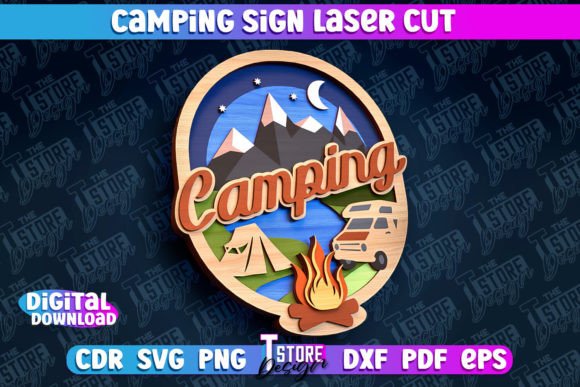
The core of this offering is a digital file package rather than a physical item. When you acquire a Camping Sign Laser Cut 3D Camping Sign design, you are purchasing the intellectual property and vector data required to manufacture the sign yourself. These designs are typically engineered to create a three-dimensional effect through layering. By stacking multiple layers of material—such as wood, acrylic, or MDF—the flat vectors transform into a sign with depth and texture.
Standard packages for these designs usually include a comprehensive set of file formats to ensure compatibility with a wide range of software and hardware. A typical archive contains:
- SVG (Scalable Vector Graphics): Ideal for web-based cutters and many modern design programs.
- EPS (Encapsulated PostScript): A standard format for professional graphic design software like Adobe Illustrator.
- DXF (Drawing Exchange Format): Widely used in CAD software and compatible with most industrial CNC controllers.
- PDF (Portable Document Format): Useful for quick viewing, printing templates, or importing into certain cutting software.
- PNG (Portable Network Graphics): Often included for preview purposes or for use with machines that can interpret raster images for engraving.
The inclusion of multiple formats is a significant benefit, as it reduces the need for manual file conversion, which can sometimes introduce errors in vector paths.
Technical Considerations and Machine Compatibility
Before selecting a Camping Sign Laser Cut 3D Camping Sign file, it is essential to evaluate your current equipment and software capabilities. These designs are specifically optimized for laser cutting machines, but they can also be adapted for CNC routers depending on the bit size and material thickness.
A crucial aspect of these files is the color-coding system used to differentiate operations. In many standard designs provided by creators:
- Red lines typically indicate where the machine should perform a cut, separating the piece from the main sheet or cutting out internal details.
- Black lines often designate areas for engraving or etching, adding surface detail without cutting through the material.
It is vital to verify that your specific cutting software recognizes these color codes correctly. While many programs automatically assign operations based on stroke color, others may require manual mapping. If your workflow relies on specific layer naming conventions rather than color coding, you may need to adjust the file upon import. Furthermore, ensuring that your machine's bed size can accommodate the dimensions of the sign is a practical necessity. If the design exceeds your work area, you will need to scale it down or split the file, which could affect the structural integrity of the 3D assembly.
Benefits of Using Pre-Made 3D Designs
There are several compelling reasons to choose a pre-designed Camping Sign Laser Cut 3D Camping Sign over creating one from scratch. The primary advantage is time efficiency. Designing a multi-layered sign that accounts for material thickness, kerf (the width of the cut), and structural stability requires significant skill and trial-and-error. Professional designers have already solved these geometric challenges, allowing you to move straight to production.
Additionally, these files offer consistency. For those running a small business selling rustic decor or campsite markers, using a proven design ensures that every unit produced meets a certain quality standard. The 3D layering technique adds perceived value to the final product; a layered wooden sign often commands a higher price point than a simple flat cutout due to its visual depth and craftsmanship appearance.
Tradeoffs and Limitations
While convenient, relying on digital downloads does come with tradeoffs. The most notable limitation is the lack of customization unless you possess vector editing skills. If you need to alter the font, change the iconography, or resize specific elements independently, you must be proficient in software like CorelDRAW, Illustrator, or Inkscape. Without these skills, you are bound to the designer's original vision.
Material constraints are another consideration. A design optimized for 3mm plywood may not translate well to 6mm acrylic without adjusting the spacing between layers. If the gaps are too tight, the pieces will not fit together; if they are too loose, the sign will feel fragile. Users must be prepared to test-fit their first prototype and potentially tweak the file offsets to match their specific material thickness.
Ideal Use Cases
This type of digital asset is a strong fit for several specific scenarios:
- Small Batch Production: Makers looking to produce a run of identical signs for a craft fair or online store will find the scalability of SVG and DXF files invaluable.
- Personal Projects: Individuals wanting to create a unique marker for their own campsite, RV, or backyard fire pit can achieve a professional look without hiring a designer.
- Prototyping: Product developers can use these files to quickly test the aesthetic appeal of 3D signage before investing in custom tooling.
When to Consider Alternatives
Conversely, there are situations where a pre-made Camping Sign Laser Cut 3D Camping Sign might not be the best choice. If your project requires highly specific branding, such as a corporate logo integrated into the camping theme, a generic template may not suffice. In such cases, commissioning a custom design or creating one internally is more appropriate.
Furthermore, if you do not own a laser cutter or CNC machine, purchasing these files adds an unnecessary step. You would then need to outsource the cutting to a local maker space or a service bureau, which adds cost and logistical complexity. For one-off projects without access to machinery, buying a finished physical sign is often more economical than buying the file and paying for fabrication services.
Making the Decision
Selecting the right design file ultimately depends on your technical readiness and project scope. If you have a compatible machine, understand how to manage vector files, and need a reliable, aesthetically pleasing design for rustic or outdoor-themed decor, this product offers a solid foundation. The variety of included file formats minimizes technical barriers, and the clear distinction between cut and engrave lines streamlines the setup process.
However, success relies on preparation. Always review the file contents immediately after purchase to ensure all layers are intact. If you require a different file type not listed in the standard archive, or if you need a PNG file in a specific resolution or color scheme for preview purposes, reaching out to the seller is often a viable option. Many creators are willing to accommodate reasonable requests for file variations.
In conclusion, the Camping Sign Laser Cut 3D Camping Sign is a practical resource for the digital fabrication community. It bridges the gap between creative intent and physical production, provided the user respects the technical nuances of laser cutting and material selection. By understanding both the capabilities and the limitations of these digital templates, you can make an informed decision that supports your crafting or business objectives.